



Stay informed with news, updates, and best practices on the ParentSquare blog.
Explore
Core Platform

Solutions for every role in your school community
Built for every type of school and district
See how we solve real challenges facing schools
Insights and ideas that add value to districts
A centralized hub for expert help and guidance

At large districts around the country, school board questions are converging around a common theme. Can the district demonstrate control over communication and its outcomes, especially during moments of risk, complexity, or public scrutiny?
Boards are examining school-home communication as a strategic district system — one that shapes operational clarity, community alignment, and institutional stability. They increasingly evaluate communication as:
This kit is organized around seven communication questions that frequently surface in board discussions. Each section outlines what boards are asking and what board-ready communication looks like in practice.
Does the district know which families it can and cannot reach, and is there a plan to close those gaps?
One unified communications platform connected to the student information system:
With ParentSquare, most districts start at 30–60% contactability and reach over 90% within a few weeks of implementation. In addition to allowing families to verify and correct their own contact details, administrators have dashboard views to monitor overall contactability throughout the school year.
Osceola County School District, FL — ~80,000 students
Within five months of implementation, the district reached 98% family contactability:
Sources: Citizen Portal AI; Osceola County School District Overview

Can the district deliver accurate information quickly to limit confusion or rumors?
The most prepared districts avoid standalone alert systems and instead rely on the same platform families already recognize and trust. ParentSquare allows districts to send urgent messages through familiar channels while maintaining consistent permissions, templates, and documentation, supporting faster response times and clearer accountability.
Clarksville Montgomery County School System, TN — ~40,000 students
Clarksville Montgomery County School System (CMCSS) transitioned from using a standalone mass notification system to ParentSquare as its central communication platform to give families more control over how they receive information and to support two-way, translated communications across schools and the district, even in time-sensitive situations.
“Smart Alerts and Urgent Alerts have helped us get critical information out to families quickly and efficiently,” said Anthony Johnson, Chief Communications Officer. By consolidating communications into ParentSquare, which integrates with the district’s student information system, CMCSS can deliver emergency alerts, schedule updates, and routine messages from a single system, while preserving choice and accessibility for families.
Sources: Clarksville Now, district announcement on ParentSquare adoption
Can every family understand critical information, regardless of language or familiarity with district systems?
Equity-focused districts measure reach and engagement by language group, not just overall totals. Language access is treated as a systems capability, not a manual accommodation. Instead of relying on staff to translate messages or manage separate workflows, language preferences are built directly into the communication infrastructure.
ParentSquare pulls each family’s preferred language directly from the student information system and applies it across all district communications. Messages are translated automatically across channels in both directions, so multilingual and newcomer families can receive and respond to information without additional steps or intermediaries.
Orange County Public Schools, FL — ~200,000 students
Orange County Public Schools serves one of the most linguistically diverse student populations in the country, with students representing 199 countries and speaking 176 different languages and dialects. To support equitable communication at this scale, the district launched ConnectOrange powered by ParentSquare, integrating family language preferences directly from its student information system.
This approach allows district and school communications—including alerts, newsletters, and two way messages—to be automatically delivered in families’ preferred languages across email, text, and app notifications. By embedding language access into its communication infrastructure, OCPS reduces friction for multilingual and newcomer families while enabling district leaders to evaluate reach and engagement across language groups.

Does leadership have visibility and control over how staff communicate with families, and is there consistency across schools?
Districts are consolidating tools not only to reduce costs, but to improve consistency, oversight, and compliance. Sharing updates across multiple tools creates confusion for families and makes it more challenging for them to engage actively. ParentSquare streamlines communication for families and meets school board oversight needs. This unified platform allows for two-way messaging among teachers and staff within set guidelines and records all communications — what was shared, when, and by whom — ensuring transparency and facilitating follow-up without adding extra oversight for school leaders or staff.
Seminole County Public Schools, FL — ~63,000 students
Seminole County Public Schools consolidated calendars, messages, forms, RSVPs, volunteer signups, updates and websites into ParentSquare, reducing confusion, improving coordination, and strengthening message consistency, all while maintaining flexibility for individual campuses.
“ParentSquare has completely transformed the way our school communicates with parents,” said coach Charlie Negron. “Having all calendars and communications in one accessible location has been a game-changer, and the automatic translation feature is especially valuable in our diverse community.” OCPS reduces friction for multilingual and newcomer families while enabling district leaders to evaluate reach and engagement across language groups.
Source: ParentSquare press release
Are required communication tools reducing friction for staff or adding to it?
Boards increasingly look for evidence that implementing a districtwide communication platform improves consistency and reach while supporting leaders through change management. Across large districts, the most effective rollouts prioritize simplification over enforcement — consolidating tools, setting clear norms, and giving principals and district leaders the resources they need to help staff transition away from legacy or unapproved apps.
Large districts usually roll out ParentSquare in stages, starting small and expanding over time. Staff learn what they need by role, at a pace that feels manageable, while reducing the number of tools they’re expected to use. This makes it easier for principals and district leaders to get everyone on the same page without turning communication into a compliance issue — one reason districts continue to renew at a 99% retention rate.
Fresno Unified School District, CA — ~74,000 students
Fresno Unified focused on reducing staff burden by consolidating family communication into a single, districtwide platform. According to Celeste Corona, Communications Program Manager, the district achieved 95-98% family contactability after implementing ParentSquare and reported an estimated 25% reduction in staff workload related to communication.
District staff attributed these gains to clearer expectations, fewer tools to manage, and streamlined workflows for classroom messaging, alerts, and translations. By standardizing how and where communication occurs, Fresno Unified improved consistency for families while giving educators back time to focus on instruction and student support.

Are we using communication to prevent absenteeism, or only reacting after students disengage?
High-performing districts balance compliance and connection in attendance accountability. They document required outreach while using early, relationship-based communication to reduce chronic absence. ParentSquare Attendance Plus automates notifications and workflows, logs delivery and responses, and tracks engagement — creating a clear communication record while enabling earlier intervention.
Mansfield Independent School District, TX — ~35,000 students
Mansfield ISD shifted from a punitive attendance model to a proactive approach to recover lost ADA funding. Leaders estimated that improving attendance by just 1–2 percentage points could recoup $2M+ annually.
By implementing ParentSquare Attendance Plus, assistant principals moved from tracking absences to engaging families earlier in the process.
Dr. Liz Russo, Director of Student Services noted that administrators are reporting a positive shift in “hearing back from families,” validating the district’s move toward a partnership-based approach to attendance rather than a solely compliance-based one.
Source: Mansfield ISD
Can leadership show outcomes instead of anecdotes?
District leaders are increasingly asked to show impact, not just activity. ParentSquare Intelligence helps districts understand how communication supports district priorities and provides clear evidence to share with their boards. AI and data intelligence embedded throughout the platform improve communications, save staff time, and surface actionable insights.
The examples below show just a few ways districts can turn everyday communication activity into clear evidence of impact:
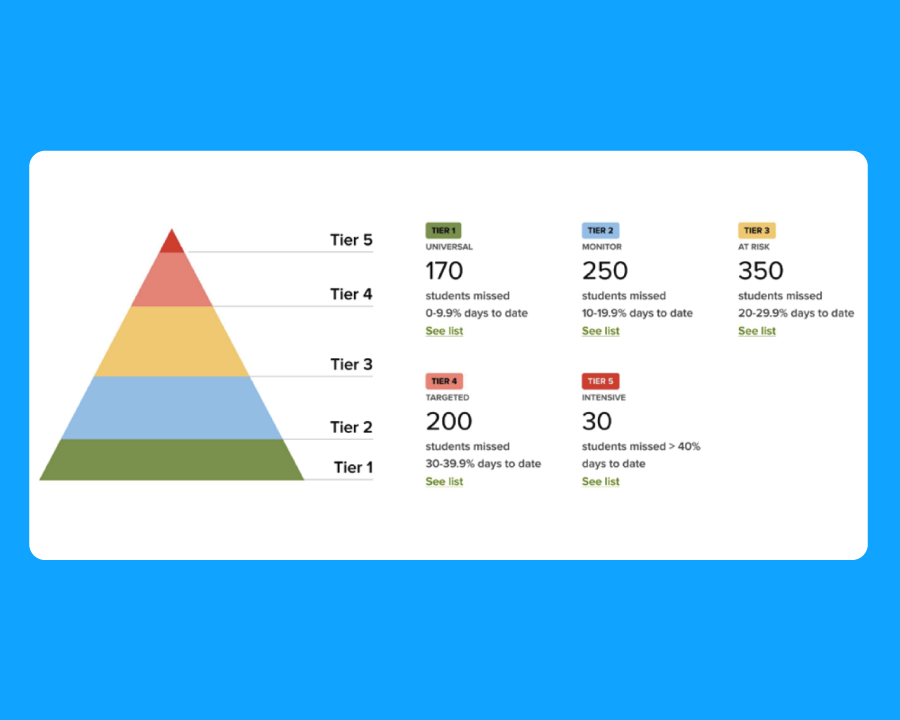
Provide visibility into chronic absenteeism and the impact of family engagement on attendance.
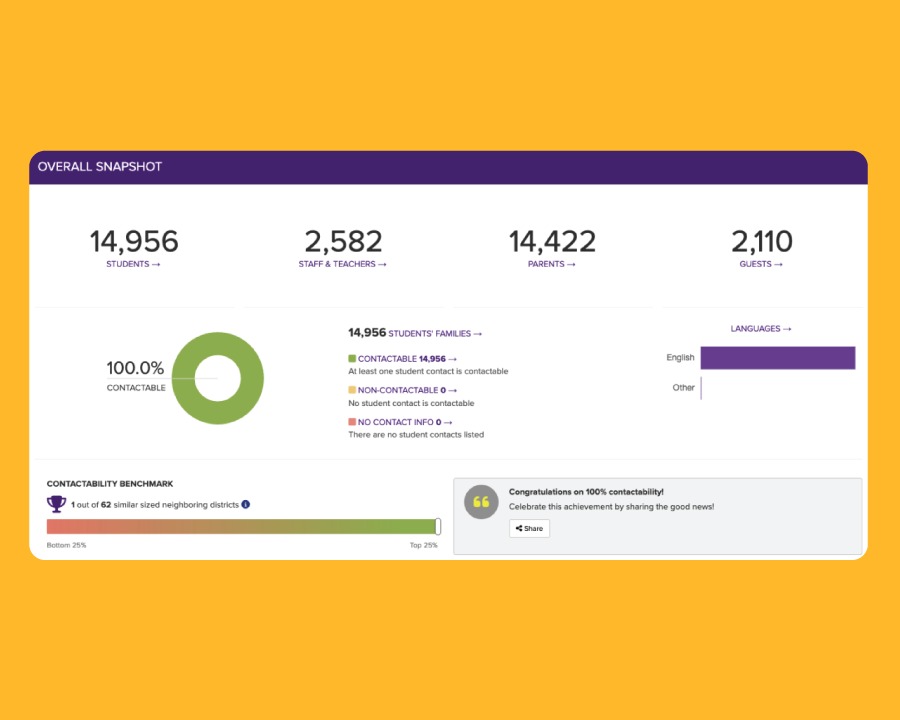
Benchmark your Contactability rate against trends and similar districts, and identify clear next steps to improve family reach.
Boards aren’t looking for perfection. They’re looking for evidence of control, clarity of ownership, consistency across schools, and proof of reach and equity. Districts that can demonstrate these through their communication infrastructure are better positioned to navigate operational, political, and financial pressures.
At ParentSquare, we partner with districts to help leaders answer the questions that boards are asking about communication. By unifying school-home messaging, improving visibility and governance, and supporting equitable reach across every school and family group, ParentSquare helps districts demonstrate control, consistency, and accountability.
ParentSquare is the leading family engagement infrastructure helping K-12 districts nationwide reach every family with an award-winning, all-in-one communication platform. Reaching over 22 million students, ParentSquare helps districts consolidate disconnected tools and outdated communication systems with personalized messaging, websites, forms, payments, attendance solutions, and more—in one easy-to-use platform. With powerful features for achieving 100% contactability, two-way translation into 190+ languages, and purpose-built AI enhancements, ParentSquare empowers districts to invite every family to be involved in their student’s education, no matter their home language or the device they use.
Recognized for growth and innovation by Inc. 5000, GSV 150, and more, ParentSquare was founded in 2011 in Santa Barbara, California. Learn more at parentsquare.com.