



Stay informed with news, updates, and best practices on the ParentSquare blog.
Explore
Core Platform

Solutions for every role in your school community
Built for every type of school and district
See how we solve real challenges facing schools
Insights and ideas that add value to districts
A centralized hub for expert help and guidance


Written by Janelle Raney, Chief Marketing Officer, ParentSquare
According to the National School Choice Awareness Foundation, in 2025 75% of U.S. parents of school-aged children, about 46 million, considered, searched for, or enrolled a child in a different school.1
21% actually enrolled a child in a new school, but 31% ran a real search and then stayed. Those families are sitting in your classrooms right now, and their current schools may never have known they were looking.
Families usually don’t leave on a single dramatic decision. They’re evaluating, quietly, all year long. Districts holding their enrollment build relationships through everyday communication that makes families feel like they belong, which makes staying the obvious choice.
In this article, we’ll explore five areas K-12 leaders should focus on for student retention:
Parents and guardians decide to look or to stay over a year made up of small moments, and there are frequently early signals if you’re paying attention.
Attendance is an excellent early signal. A January 2026 study by Attendance Works and the School Policy, Action, and Research Center (SPARC) at UC Davis, covering nearly 1.6 million students, found that chronically absent students in grades K-3 change districts between school years at roughly twice the rate of their peers.2 Check in with them. Find out what’s making it hard to get to school before they try somewhere else.
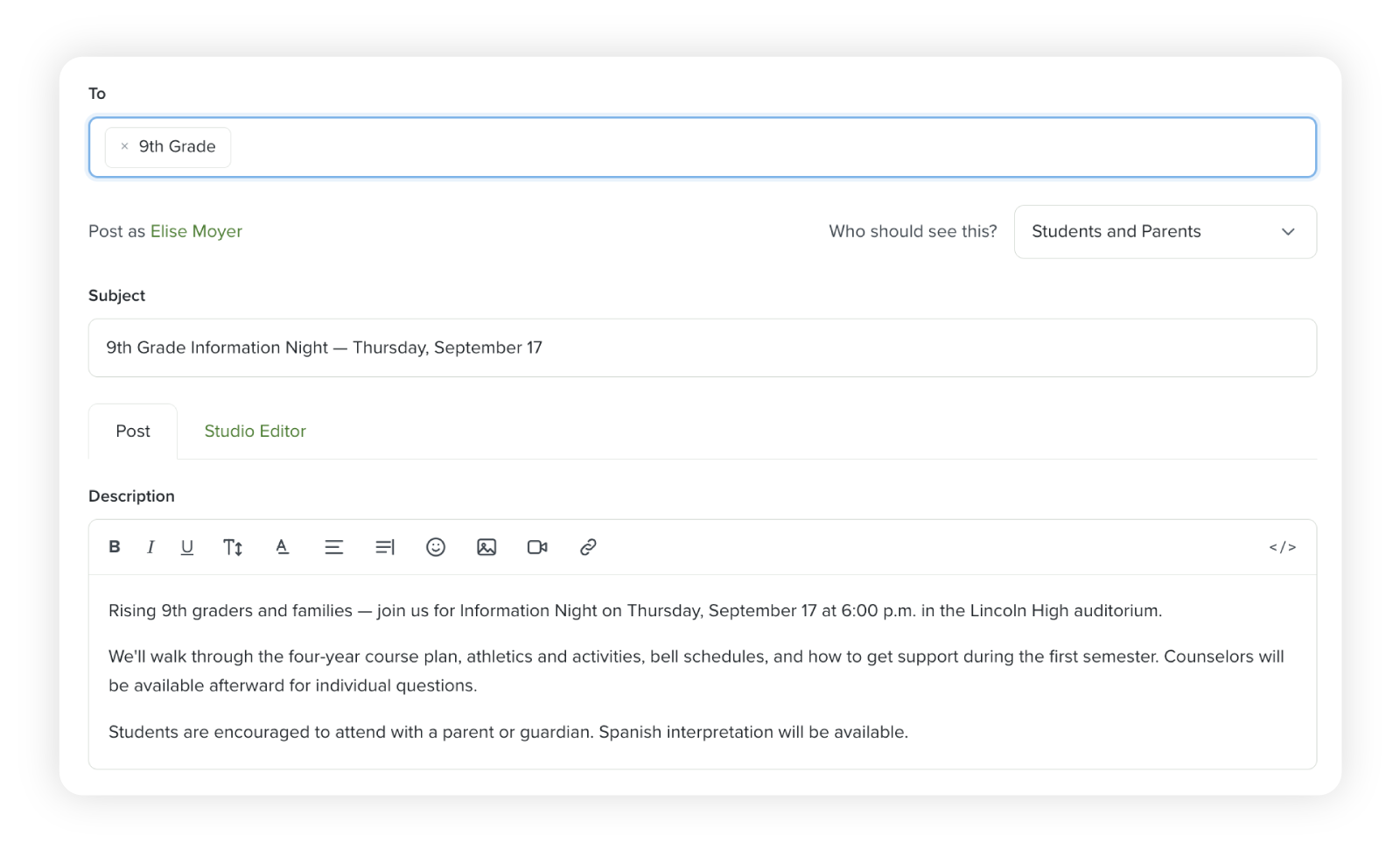
ParentSquare Attendance Plus pairs proactive family outreach with the compliance workflows districts must run, helping your student services team reach out to those needing extra support and offering positive, welcoming encouragement.
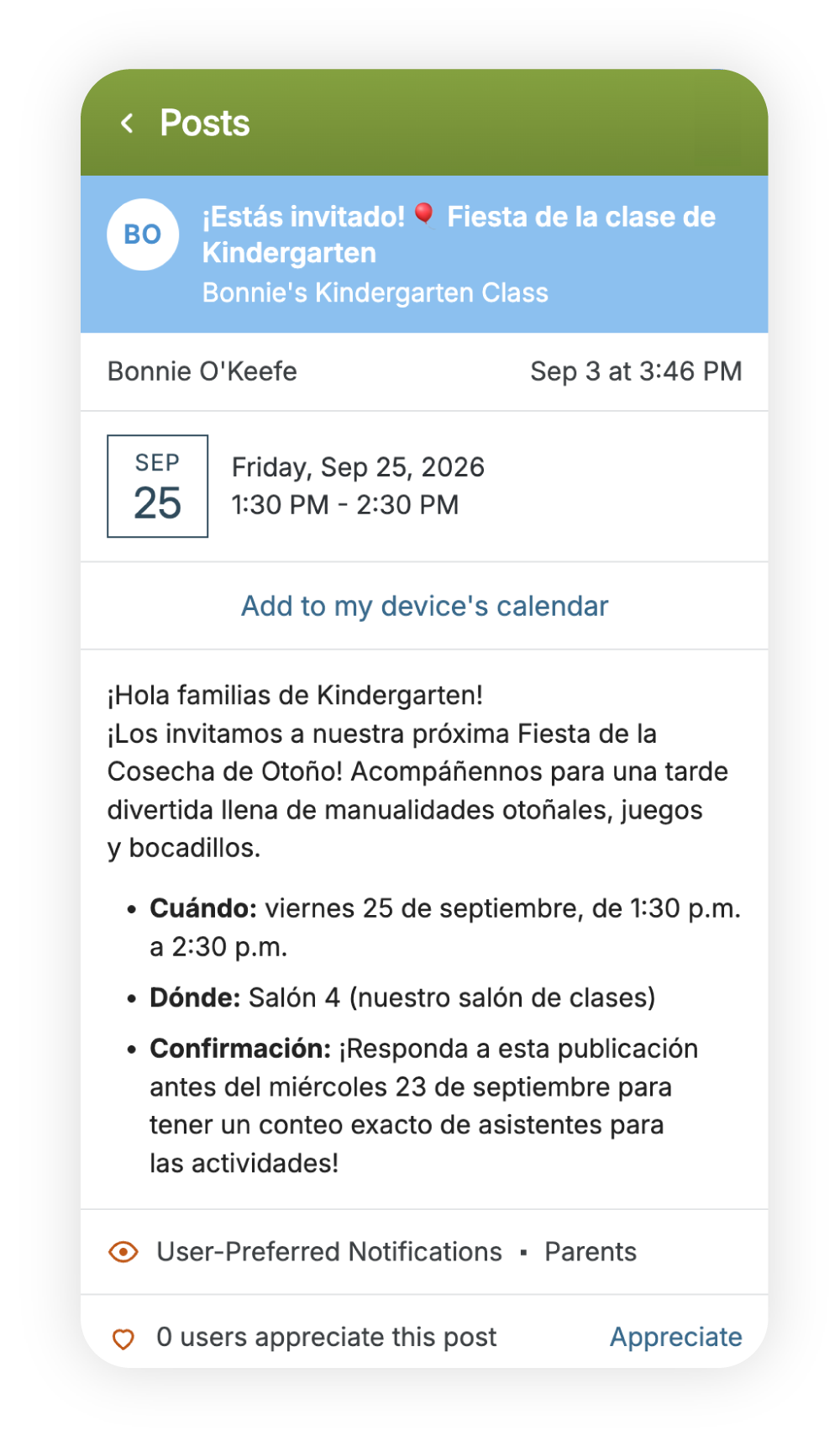
Grade transitions are another predictable signal. Your highest-value retention audiences are rising kindergarten families, fifth graders heading to middle school, and eighth graders heading to high school. Build a communication arc for each cohort, starting the spring before, and run these as custom groups in ParentSquare so families know about upcoming tours, information nights, and important deadlines.
Tip: Put the chronically absent list in front of whoever owns enrollment, not just whoever owns compliance. In most districts, those are different people who never compare notes.

The families you’re most likely to lose may be the families you were never actually reaching.
A district can send notices to every household and still miss a large group of families. Wrong numbers. Inactive email addresses. A household that only receives SMS. A family whose home language isn’t English that receives everything in English anyway. Those families aren’t disengaged. They’re unreached, which looks identical in the data, but is a completely different problem.
Reaching 100% of families is a measurable target, not an aspiration. ParentSquare gives districts automatic two-way translation into 190+ languages, delivery across the channels families actually use, and the data to show exactly where contactability is breaking down. When a family misses the registration message, they feel their district didn’t think to include them.
Families who leave rarely name academics first. They describe a specific moment: a child mistreated with no one intervening, or a student cut from a team with nothing else to belong to.
The priorities families name line up with that. Among parents who enrolled a child in a new school, 61% were looking for safety and a supportive environment and 47% for the social environment. Strong academics drew 36%.¹
Belonging is built in a classroom, on a team, in a club, among parents who know each other’s names. Four things separate the schools where families feel part of something from the ones where a portion always feels left out.
The four above are things a school can get right. This one is different: sometimes nobody did anything wrong. A student gets cut from the basketball team. The tryout was fair and the roster is finite, but that family moved from inside something to outside it in a single afternoon, and in most schools nothing happens next. No message from the coach, no mention of intramurals or a manager spot or the three other things starting next month. Just silence, and a family with one less reason to stay.
A cut should end with the next thing. So should a concern that doesn’t go the parent’s way, a program that gets scaled back, a request that gets denied. The decision is rarely what costs you the family. The silence after it is.
Tip: Build the follow-up before you need it. Keep a standing list of what else is open: clubs, intramurals, second-semester tryouts, a manager spot. Those options turn every “no” into the next thing, and take just minutes to assemble.
Intent to return is the most underused retention moment in the K-12 calendar. Most districts treat it as paperwork. A form goes home, some percentage comes back, and the rest becomes a summer scramble. But a family who hasn’t returned that form is telling you something.
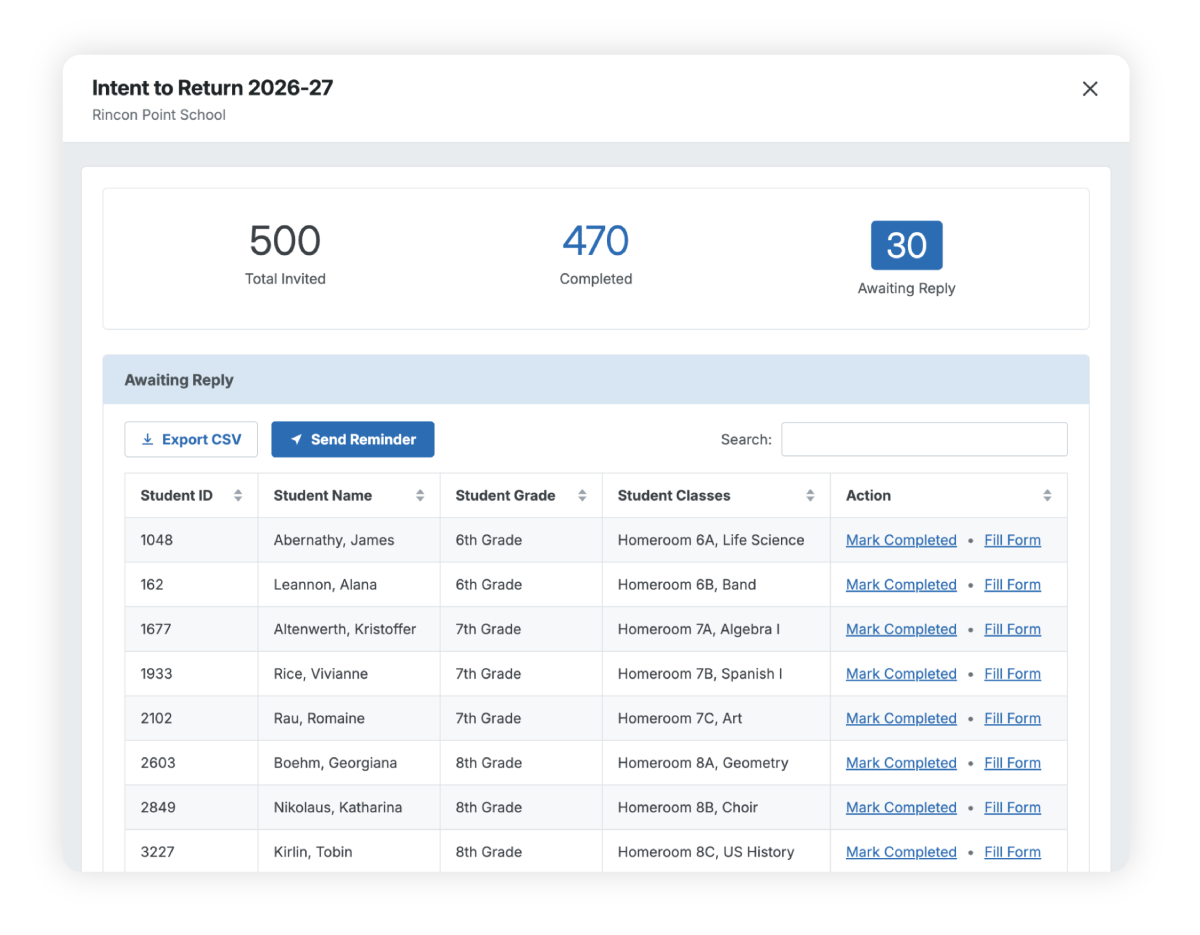
Among the 31% who searched and didn’t switch, the top barriers were concern about disrupting their child (33%) and uncertainty about making the wrong choice (26%).1 Those are families who want a reason to stay. A district that reaches out by name, answers the question, and makes returning simple is often all the reason they need.
Tip: Send the follow-up as a direct message rather than another all-district post. A family who ignored the announcement may answer a message addressed to them.

Find your parents who really engage. The ones who read updates, volunteer, and show up. Recruit a handful as ambassadors for tours and back-to-school nights. When one of them says something wonderful about your school, ask permission and use it on your website, in the press, and on social media. Invite families to leave a review on Niche or GreatSchools, where prospective parents and homebuyers may be looking.
With ParentSquare, you can publish posts to your website and social channels at the same time, so a high school robotics win reaches past the families who already know, and may inspire a middle-schooler to stay for that team in your high school. Use ParentSquare Community Groups to build public signup lists for prospective parents, alumni, and boosters, so those stories reach the people most likely to spread them.
The most credible voice about your school isn’t a glossy marketing brochure. It’s another parent sharing their family’s experiences.
Every family that leaves takes funding with it. Public schools spent $17,619 per pupil in FY 2024, and federal revenue fell 4.4% that same year.3
Not every departure is preventable. Some enrollment loss is demographic, and no communication strategy changes it. Birth rates fell 15% between 2012 and 2024, and Bellwether projects a further 6% decline, about 2.7 million students, between 2022 and 2031.4 But demographics aren’t the whole story. Charter schools, private schools, homeschooling, and in some states open enrollment across district lines are all options parents are exploring. Some of those students are going to leave, but many are still reachable and just want a reason to stay.
Your families are going to look. The only question is what they find when they compare what they have to what they might get, and that answer is being written right now, in every moment and every interaction.
ParentSquare brings communication, attendance, websites, engagement data, forms, and payments together so districts can own their narrative and build confidence with families that they made the best choice for their child’s education.
Show what makes your schools special, every day. Keep families informed, set clear expectations, and give every family a way to participate. That’s how families choose you again.