



Stay informed with news, updates, and best practices on the ParentSquare blog.
Explore
Core Platform

Solutions for every role in your school community
Built for every type of school and district
See how we solve real challenges facing schools
Insights and ideas that add value to districts
A centralized hub for expert help and guidance

Informed by feedback from more than 1,600 respondents across classrooms and K–12 district leadership teams, and shaped by ParentSquare’s fifteen years working alongside schools nationwide, these reflections highlight how expectations for communication are evolving.

School-home communication has entered a new phase.
As districts move beyond the early digital era and into an AI-driven landscape, expectations are shifting. New tools promise efficiency and automation, but the underlying questions remain the same: Is communication helping families stay informed and making it easier for them to get involved? Is information targeted and timely, or contributing to overload? Is communication strengthening the partnership between school and home?
To explore how these questions are playing out in real communities, we reviewed feedback from more than 1,600 respondents nationwide. Their perspectives reflect daily experience across classrooms, front offices, and district leadership teams.
After fifteen years working alongside schools, we’ve seen how expectations have evolved and how communication has taken on greater responsibility.
The perspectives shared here are shaped by the educators who manage school-home communication day to day.
Teachers represent the majority of respondents, reflecting those who communicate with parents and caregivers most frequently as part of their daily work. School and district administrators contribute leadership-level perspectives on consistency, visibility, and scale. Support staff provide insight into workflows, follow-up, and documentation that support communication across schools.
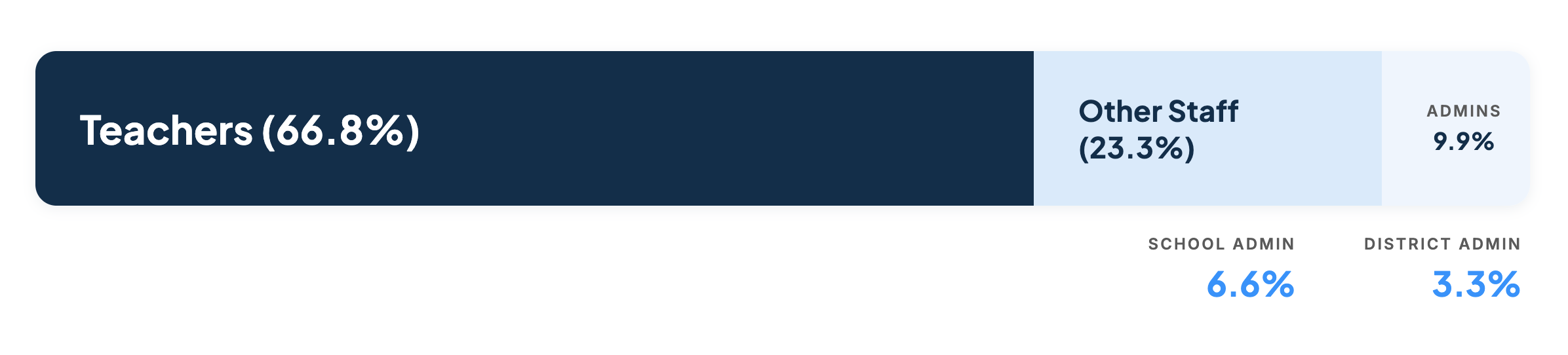
Throughout this report, “educators” refers collectively to teachers, administrators, and school staff.
Teacher participation at this scale signals more than regular use. It means the communication system fits into daily classroom work and keeps families connected without adding confusion or extra tools. Familiarity with classroom platforms may ease rollout, but sustained districtwide adoption depends on whether the system supports alignment across classrooms, schools, and central offices.
What teacher participation signals
Teacher participation at this scale signals more than regular use. It means the communication system fits their daily work and keeps families connected without adding confusion or extra tools.
Reaching families at scale is no longer the primary hurdle. Most districts can send messages. What has changed is how success is defined.
Communication is now evaluated by clarity, consistency, and connection. Leaders want to know that families are receiving messages, understanding them, and engaging in dialogue. It is no longer treated as a simple operational task. It now plays a central role in building and sustaining relationships with families.
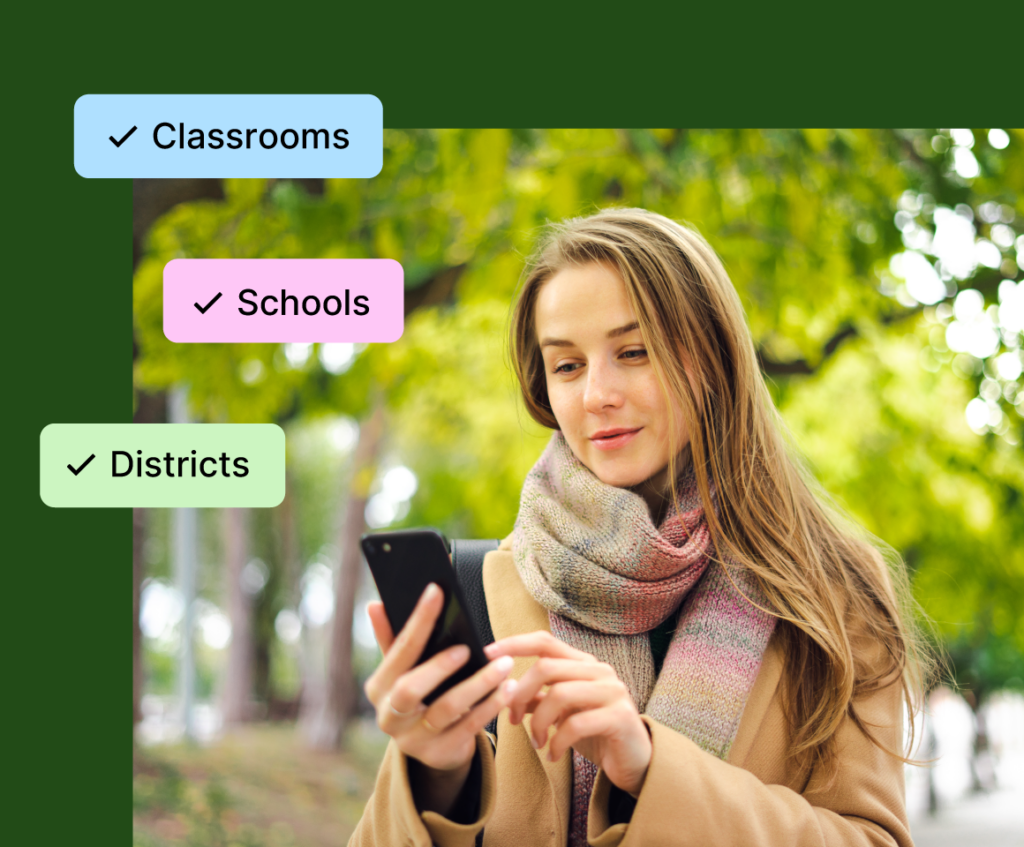
Educators consistently describe disconnected tools as a barrier to effective communication, particularly for families navigating multiple points of contact.

“All the information I need is in one place.” — Teacher
“It does everything a school needs!” — Administrator
“I am at more than one school. This really helps me keep track of everything!” — Teacher
Districts are consolidating communication into a single system that supports classrooms, schools, and central offices together. This shift improves consistency for families, visibility for leaders, and alignment across teams.
Families are more likely to engage when communication is predictable and centralized, and educators are better able to manage communication when delivery, history, and responses are visible in one place.

Educators describe a clear move away from reactive, policy-driven outreach toward communication that begins earlier and is rooted in partnership, particularly around attendance, behavior, and academic support. They emphasize starting conversations earlier, before concerns escalate, and framing communication as a shared responsibility rather than correction.
“It isn’t about tools anymore. It’s about whether families feel seen and supported.” — Teacher
Communication is no longer expected to function as a one-way broadcast. It is expected to build relationships. Educators want messages that invite response, open dialogue, and help families engage while there is still time to act together.
Across roles, educators describe equity not as an aspiration, but as a baseline expectation of communication.
When reflecting on their daily practices, teachers consistently point to language access as a defining factor in whether communication feels equitable.
“Parents are able to read in the language most comfortable for them.” — Teacher
“My parents speak different languages so it allows us to communicate so easily.” — Teacher
These responses point to a practical reality. Equity depends on universal delivery. Systems that require families to manage accounts, opt in, download apps, or unlock features create gaps that educators immediately recognize.
Equity isn’t conditional
Communication should not depend on who downloads an app or pays for access.
Schools can’t provide equitable communication when access depends on a family’s ability or willingness to pay. ParentSquare was built to support universal access without shifting costs to parents or caregivers, so districts can serve every family consistently.




Time is one of the most constrained resources in a school. As a result, communication systems are judged by how well they fit into the rhythm of the school day. That reality comes through clearly in how teachers describe their needs.
“Teachers need things to be VERY user-friendly because we don’t have a lot of time.” — Teacher
Educators value fewer platforms, fewer steps, and fewer places to check for information across their day. Communication has to work between classes, during transitions, and in the small gaps between everything else.

Educators point to a few practical reasons communication systems continue to be used over time: they’re responsive, easy to navigate, and backed by real support when something goes wrong.
Administrators, in particular, emphasize usability and ongoing partnership as factors that matter well beyond onboarding. Systems that are intuitive and supported remain embedded in daily operations.
“ParentSquare has by far been the most user-friendly, simultaneously offers the most, yet is the easiest to learn, AND has the most responsive help staff.” — Administrator
Administrator feedback reflects sustained use across everyday communication needs. The system remains part of operations as responsibilities shift and priorities change.
Over time, systems are judged less by how they launch and more by how they perform under real-world conditions. Long-term partnership requires infrastructure, experienced support teams, and leadership engagement that extend well beyond initial implementation.=
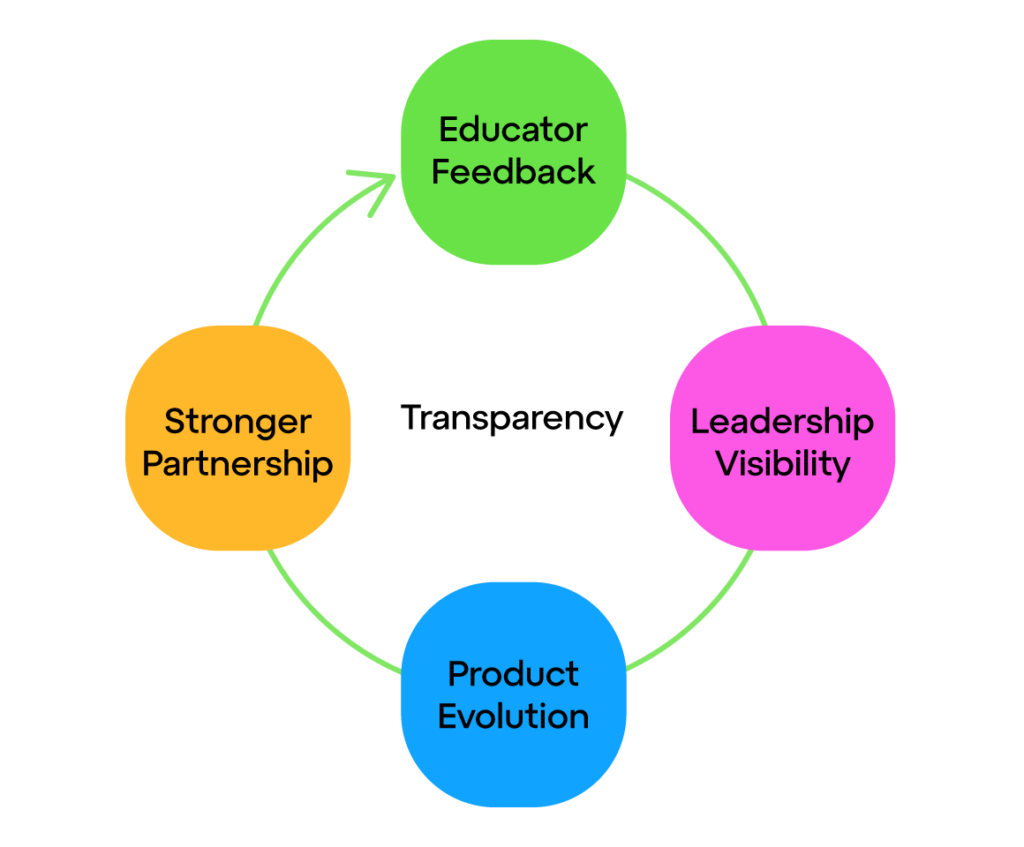
As communication systems become more central to district operations, leaders look beyond features and functionality. They pay attention to how product decisions are made, how feedback is handled, and how visible company leadership remains over time.
Educators value organizations that communicate openly about product direction, acknowledge challenges directly, and invite input into what comes next. Ongoing dialogue between districts and company leadership signals that communication systems are not static tools, but evolving partnerships.
At ParentSquare, leadership engages directly with districts, and customer feedback informs product priorities. Communication solutions evolve based on classroom and district realities, shaped by long-term partnership rather than short-term incentives.
School-home communication should reflect the needs of educators and families. The systems that support it should evolve accordingly.
Long-term partnership shapes better decisions
School-home communication should be shaped by the needs of educators and families, with decisions guided by long-term partnership rather than short-term incentives.

School-home communication has matured. The core challenge is no longer whether a message can be sent. It’s whether families can actually be reached, meaningfully engaged, and not overwhelmed by fragmented tools and disconnected systems.
Engagement metrics matter. Open rates, participation trends, and response patterns offer useful insight into how families are responding. True family engagement cannot exist without verified reach. If a district cannot reliably connect with families, engagement metrics lose their meaning.
Contactability™ remains the gold standard foundation for everything that follows.
Without accurate, verified contact information, even the most thoughtful communication strategy stalls before it begins. Districts can build proactive workflows, invest in stronger messaging, and prioritize engagement, but if families cannot be reached, those efforts don’t translate into impact.
Contactability is the gold standard for true family engagement. It’s the foundation engagement depends on.
The typical ParentSquare district reaches 99.4% of families.
Contactability turns reach into a measurable, actionable operational standard. It gives leaders visibility into how many families they can reliably connect with and where gaps remain. It shifts the conversation from assumptions to accountability.
Across the districts we serve, high contactability aligns with fewer missed messages, stronger attendance follow-up, and clearer communication loops between classrooms and families. Engagement does not replace contactability. It depends on it.
The educators represented here are not asking for more messages. They are asking for communication that works: communication that actually reaches families, invites two-way dialogue, and fits into the realities of daily school life.
Strong school-home communication today centers on engagement built on verified reach and supported by systems that hold up over time.



This piece is shaped by the educators and leaders who took time to share what’s working and where communication still needs to improve. Their feedback helps clarify what strong school-home communication looks like today and what it requires moving forward.
If you’re part of the ParentSquare community, thank you for continuing to shape how the platform evolves. If you’re exploring what’s next for your district, we hope these reflections offer clarity. Schedule a demo to see how ParentSquare helps districts reach every family and build stronger engagement.