



Stay informed with news, updates, and best practices on the ParentSquare blog.
Explore
Core Platform

Solutions for every role in your school community
Built for every type of school and district
See how we solve real challenges facing schools
Insights and ideas that add value to districts
A centralized hub for expert help and guidance


Your district website is more than an information hub. It’s your digital front door, and in an era of increasing school choice, it may be the deciding factor for a prospective family weighing their options.
Most districts invest significant time and resources into their websites, but the result often looks more like a digital filing cabinet than a marketing tool with overloaded homepages, outdated photos, and buried enrollment links. When a prospective parent can’t find where to enroll their student or a current family can’t locate the school calendar, they look elsewhere or disengage entirely.
The districts with the most effective websites treat design, content, and search visibility as core infrastructure, not an afterthought. They build school websites that tell their story, make key information easy to find, and keep content fresh without adding more work for staff.
Here is a practical framework for making that happen.
1. Visual consistency and quality
2. Clean layout and content strategy
3. Storytelling and marketing
4. Strategic calls to action
5. Search visibility and family retention
Effective district websites share a common foundation. Before diving into the specifics, here are the five areas that hold everything together.
Here is what each of these looks like in practice.

A district or school website is often the first interaction a family has with your schools. That first impression hinges on visual quality.
Each website should stick to a consistent color palette and typography across every page. When multiple editors contribute content, brand guidelines keep the experience cohesive and professional rather than fragmented. Districts that invest in consistent branding across their websites build stronger trust with families from the very first visit.
With ParentSquare Smart Sites, districts can set brand standards at the district level so every school page stays aligned, without requiring manual oversight of every edit.
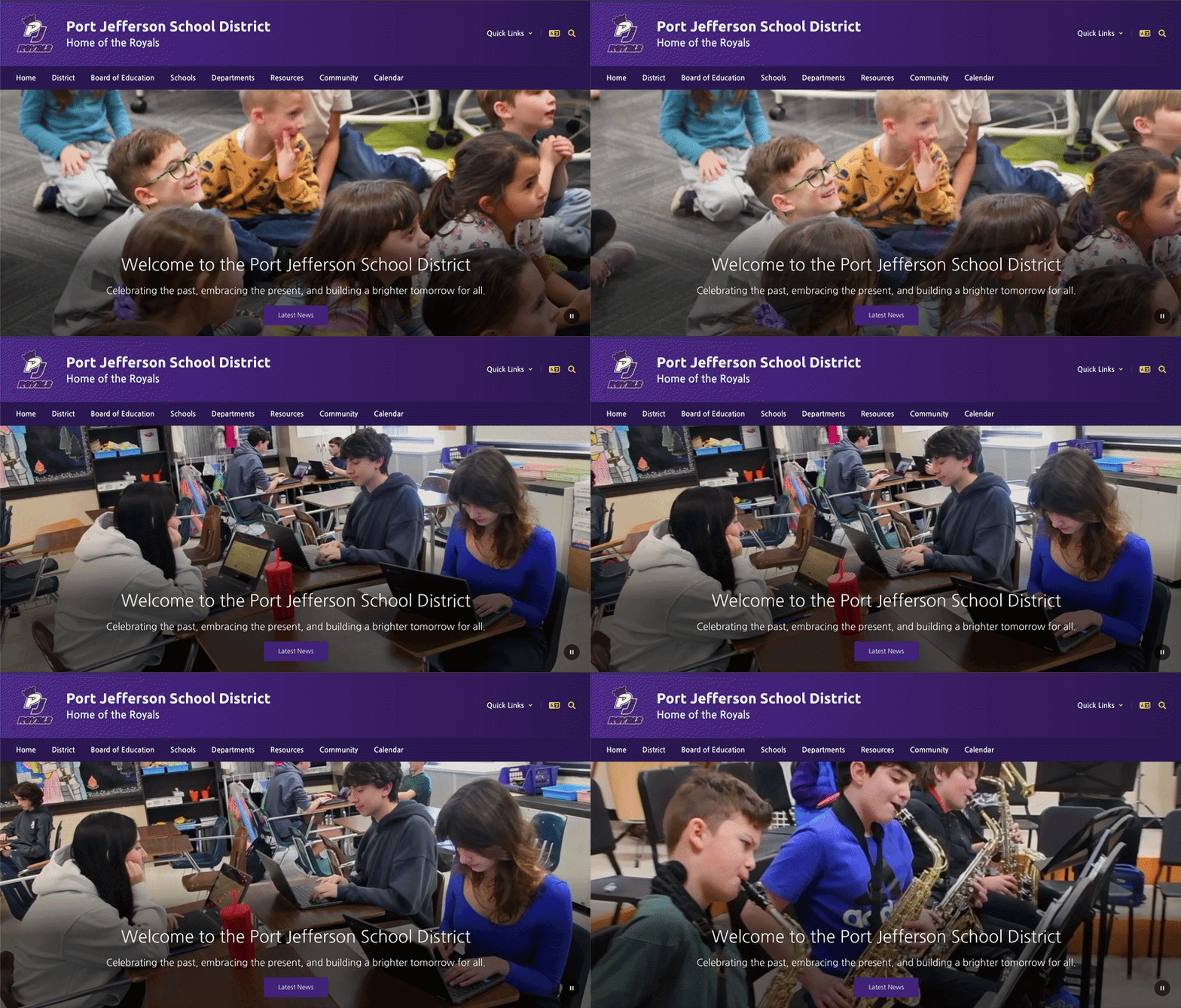
Use only high-resolution imagery and video. A single blurry photo can undermine the credibility of an otherwise polished site. Crop images to their intended display dimensions so they render cleanly on desktops, tablets, and phones.
Action photography works best. Photos of students learning, playing sports, and engaging in school life tell a more compelling story than posed portraits or stock images. These visuals show the heart of your community and give prospective families a feel for the student experience before they ever visit campus.
Tip: Limit your main homepage photo gallery or rotator to 10 images or fewer. This way your most important content gets seen, not lost in an endless slideshow.
The instinct to put everything on the homepage is understandable, but it works against you. A cluttered front page overwhelms visitors and buries the content that matters most.
Reserve the homepage for your most important messages and calls to action. Move specific documents, forms, and flyers to dedicated subpages where families can find them in context.
Reduce visual noise by avoiding excessive buttons, illustrated graphics, and competing design elements. A clean layout makes navigation intuitive and keeps visitors focused on what you want them to see and do.
Tip: Not every piece of information belongs on the front page. If a document is only relevant to a specific grade level or program, create a subpage for it. Your homepage should answer one question: “What do I need to know or do right now?”
Your website should not exist in a silo. Districts that pair streamlined website design with strong school-home communication practices create a seamless experience for families across every touchpoint.
When your website, newsletters, alerts, and social media posts all flow from the same platform families already use, content stays consistent and staff avoid duplicating effort. Families see the same message whether they visit your homepage, check their email, or scroll social media.
Smart Sites works hand-in-hand with the ParentSquare communication platform, so you can publish once and reach everyone, making every interaction count.

Most district websites inform, but the best ones inspire. Shifting from a resource-hub mindset to a marketing mindset is one of the most impactful changes a K-12 leader can make.
Highlight core values, signature programs in academics, athletics, and the arts, and the achievements that set your schools apart. Use bold headlines and modern layouts to create a strong first impression that sparks interest rather than just delivers information.
Replace long paragraphs about signature programs with icons and bold layouts that help families instantly grasp what your schools offer. Visualize your edge rather than explaining it.

Feature testimonials from students, alumni, parents, and staff to give prospective families an authentic view of your community. Authentic voices carry more weight than any marketing copy.

High-quality video and photography that showcase real student success and teacher impact make your district’s experience tangible for families considering enrollment. Prioritize “feeling” over “reading” on your homepage and key landing pages.

Tip: Use your website to celebrate wins regularly. Award announcements, student spotlights, and “good news” stories keep your homepage fresh and give current families a reason to come back and share.
A beautiful website still falls short if families can’t figure out how to take the next step. Strategic design turns browsers into enrolled families.
Place your “Enroll Today” button in the top navigation and the main banner. If a parent has to search for the enrollment link, they may move on before they find it.
The same principle applies to any high-priority action. Contact forms, event RSVPs, calendar access, and digital forms and permission slips should all be easy to find and complete from any page.
When you treat every page as a marketing asset rather than a document repository, you create an experience that inspires confidence and action. Use clear headings, short paragraphs, and prominent next steps so families always know where to go.
Tip: Test your enrollment path. Ask a parent who has never visited your site to find the enrollment button. If it takes more than a few seconds, rethink the placement.
You cannot engage families who never find your website. Search engine optimization (SEO) has always been important for districts, but the way families discover and evaluate schools is changing quickly. Traditional search still matters, and now AI-powered tools are reshaping the landscape alongside it.
Phrases like “best school districts near [your city]” or “top elementary schools in [your county]” reflect real parent queries. Create pages and blog posts that answer these questions directly, and you will appear in search results when it matters most. Structure your content with clear headings, title tags, concise metadata descriptions, and relevant keywords to improve how search engines surface your site.
Smart Sites includes built-in SEO tools so your team can track traffic and optimize content for improved search visibility without manual overhead.
Attracting new families is important, but delighting your current community is just as valuable. Satisfied parents become your most effective brand ambassadors, sharing recommendations with neighbors, on social media, and at community events.
A strong family engagement strategy paired with an engaging website creates a reinforcing cycle of trust and growth. Use your website and communication platform together to share “good news” consistently and keep your district top of mind for current and prospective families.

Tip: Make it easy for families to access your website in their home language. Smart Sites offers built-in website translation into 190+ languages, along with accessibility features that support WCAG 2.1 and ADA compliance.
Building an effective school website comes down to connecting design, content, and communication so that families, prospective parents, and staff all have what they need.
Districts that take this approach see stronger first impressions with prospective families, higher enrollment conversion rates, more consistent branding across schools and departments, and a website that stays fresh without adding operational burden to staff.
The goal is not just to build a website. It is to create a digital front door that tells your district’s story, makes key actions easy, and invites every family to be involved, from the first visit through every year that follows.
ParentSquare Smart Sites brings your website and communications together so districts can build engaging, accessible, and easy-to-manage websites without adding complexity. To see how it can work for your district, request a demo.